

My Role
Team
Timeline
Focus


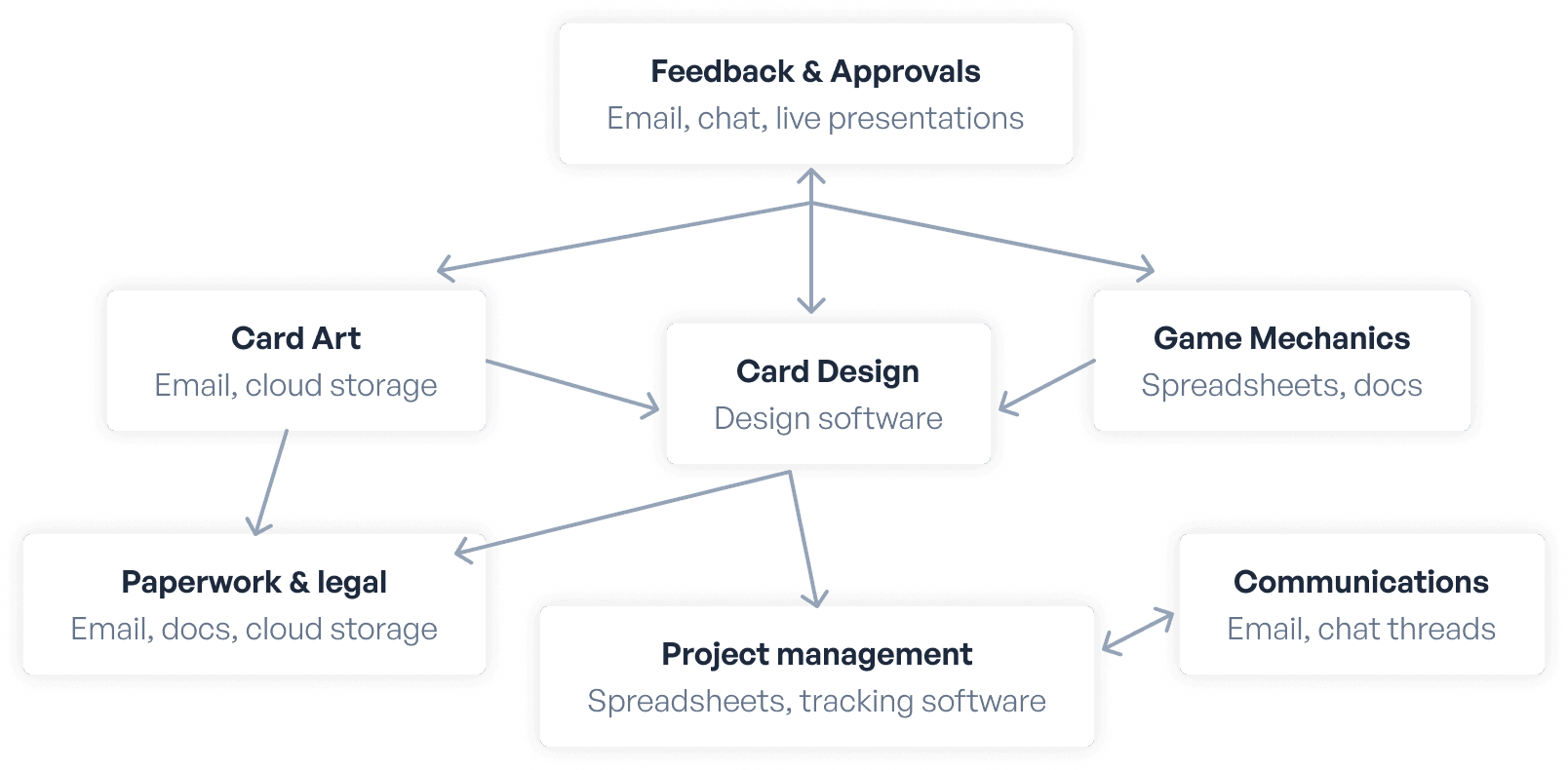
No centralized answers
01


02


03

Enterprise demos became design sessions.
Publisher demos regularly evolved into working feedback sessions, repeatedly expanding the product's scope and surfacing new requirements. Design became an active part of product discovery rather than a downstream deliverable.
The PM owned the domain. I owned the interface.
I partnered closely with a Product Manager who had mapped the production pipelines and documented publisher requirements before I joined. He held the domain knowledge while I translated those workflows into software through information architecture, interaction design, and interface design.
A shared system kept design ahead of the complexity.
Working with the VP of Engineering, we rebuilt Create on a shared ShadCN component foundation. That allowed design effort to stay focused on production workflows instead of rebuilding interface primitives as scope expanded.
The architecture absorbed expanding scope.
Carde Create absorbed three client-driven expansions without requiring its underlying interaction model to be rebuilt, allowing new workflows and capabilities to integrate into the existing system rather than fragment into separate tools.
Enterprise collaboration shaped the product.
Publisher feedback sessions repeatedly expanded the product's scope and contributed to securing two enterprise development contracts.
Project status.
Carde Create reached prototype stage before Carde ceased operations. The Artist Portal was fully designed and supported by backend architecture, though front-end implementation was never completed.
What I owned
The complete user experience for Carde Create, including information architecture, interaction design, interface design, the card-as-source-of-truth model, permissions architecture, Artist Portal, and the shared ShadCN-based component system.
What I didn’t own
The production workflow itself. Publisher requirements and production pipelines were defined before I joined and documented by the Product Manager. Engineering owned the backend architecture and implementation.
Good architecture survives changing requirements.
Carde Create absorbed three rounds of expanding scope without requiring its underlying interaction model to be rebuilt. The company didn't survive long enough to ship the product, but the architecture consistently accommodated new requirements.
Constraints produce better systems.
I inherited a production workflow I didn't define in a domain that was new to me. Designing around real operational constraints produced clearer decisions than starting from a blank slate.
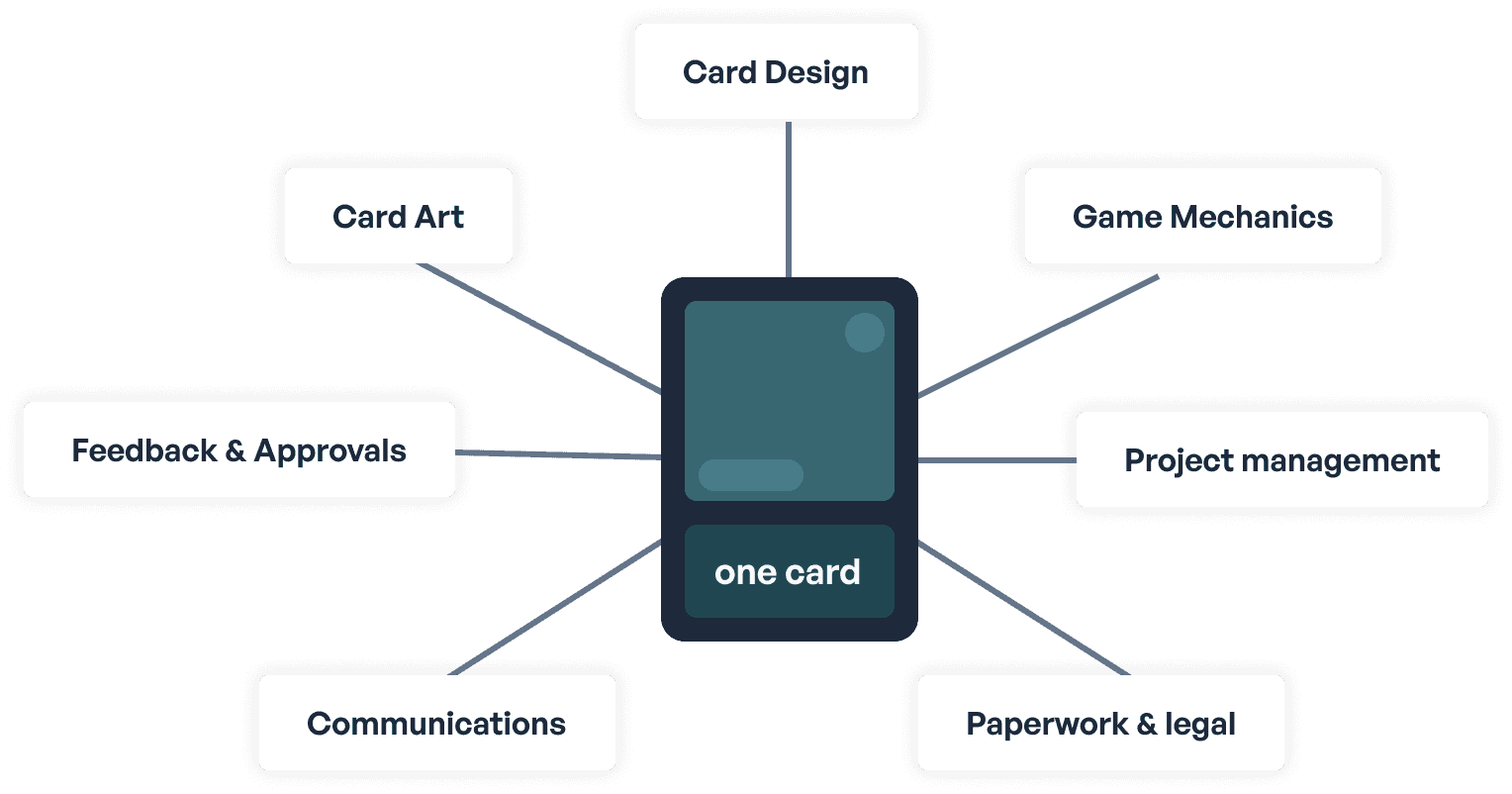
Organizing the system mattered more than adding features.
Every expansion introduced pressure to build another tool. More often than not, the better solution was to extend the card itself. Choosing the right organizing object had a greater impact on the product than any individual screen I designed.